
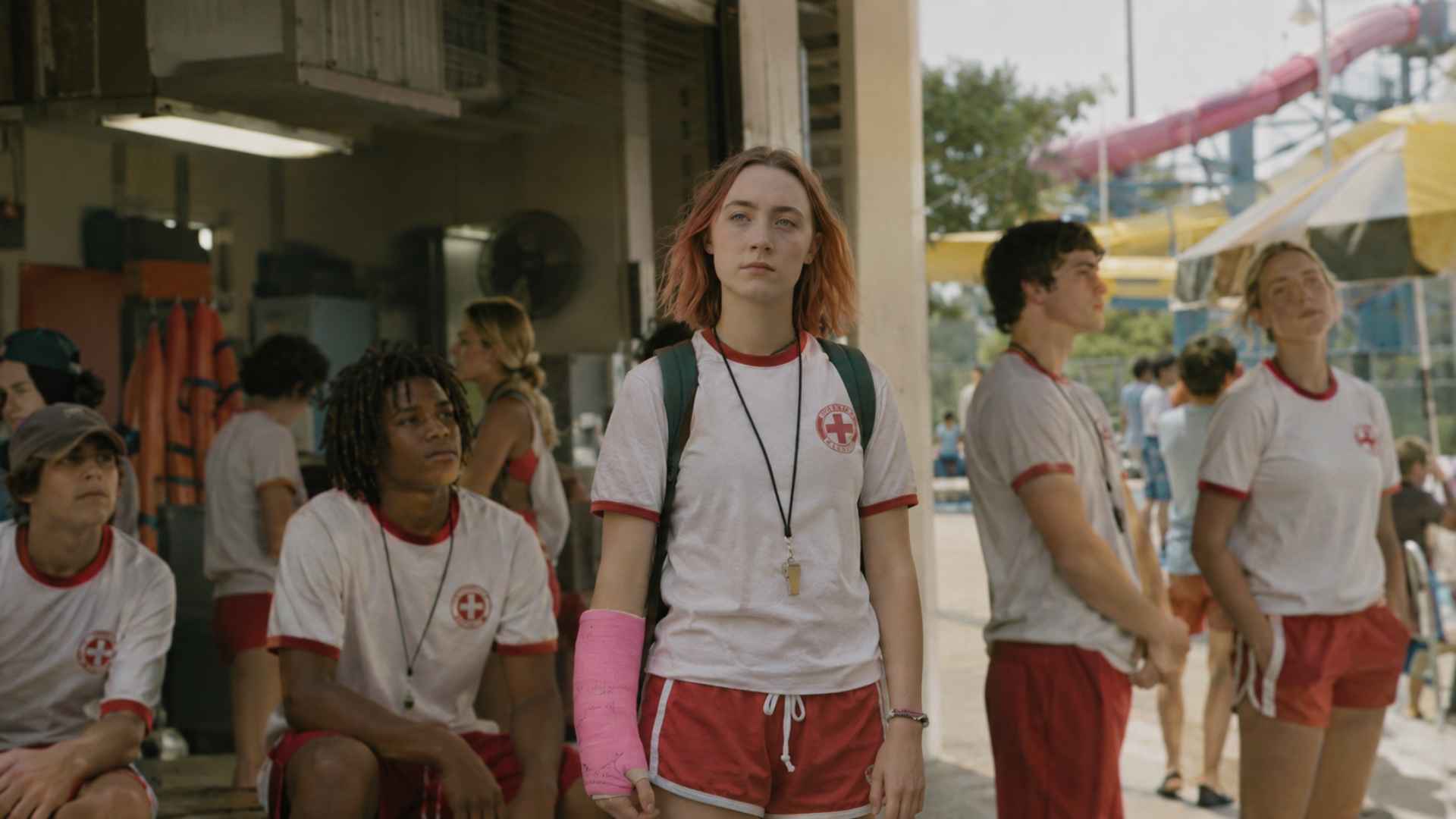
Summer occupies a distinctive place in coming of age cinema because it gives young characters time away from familiar routines while placing a clear limit on their freedom. School breaks, temporary jobs, and afternoons spent with friends create situations in which everyday decisions begin to carry new weight. Rather than depend on a dramatic rite of passage, many recent films build their stories from small encounters, uncomfortable conversations, and the knowledge that a particular season will not return in quite the same form.
Teenage work is especially useful in this kind of storytelling. At a pool, amusement park, or local recreation center, young people must follow rules, deal with strangers, and cooperate with colleagues who may also be friends. Employment does not automatically make them adults, but it can expose the distance between being trusted with a task and feeling ready for it. Shared shifts also create temporary communities, where friendships develop outside school and family expectations.
Contemporary coming of age films approach these transitions from different ages and social circumstances. Some concentrate on teenagers approaching high school, while others follow children whose freedom is shaped by their family’s economic situation. Films released across the 2010s and 2020s demonstrate that growing up need not be represented by a single life changing event. The surrounding environment, whether a water park, motel, or suburban neighborhood, often provides the structure through which characters encounter new limits and possibilities.
Summer as a Turning Point
Summer provides a natural beginning and ending for a youth centered narrative. Its temporary nature creates anticipation without requiring an artificial deadline. Friendships formed during a school break may become important precisely because their future is uncertain. For teenagers with seasonal responsibilities, the final shift can mark more than the end of paid work: it may also end a routine that briefly gave them independence, belonging, or confidence. Those emotional changes can be subtle enough to remain unspoken.
Recreational spaces also contain different experiences within the same location. Visitors see swimming pools and water parks as places of leisure, while staff members encounter schedules, maintenance, safety expectations, and repetitive tasks. This contrast gives filmmakers a way to depict early responsibility without treating employment as a simple lesson in maturity. Meanwhile, friendships and disagreements develop in shared spaces. The setting becomes part of the story because its physical boundaries influence who meets, where they spend time, and what they notice.
Films That Present Different Paths to Maturity
Several films show how a limited summer or transitional period can hold substantial emotional change. The Way, Way Back (2013) uses a water park and an uneasy family holiday; The Florida Project (2017) follows childhood near a tourist destination; and Dìdi (2024) examines the weeks before high school. Their characters differ in age and circumstance, but each film pays close attention to places that young people occupy before a new stage of life begins.
The Way, Way Back and a Summer Job
Directed by Nat Faxon and Jim Rash, The Way, Way Back follows 14 year old Duncan, played by Liam James, during a difficult summer vacation with his mother and her boyfriend. Duncan finds refuge at the Water Wizz water park, where manager Owen, played by Sam Rockwell, offers companionship and a chance to work. The park gives Duncan an identity beyond the tensions of his temporary home. His growing confidence comes from relationships and repeated experiences rather than a sudden transformation, making the workplace central to the film’s emotional direction.
The Florida Project and Childhood Space
Sean Baker’s The Florida Project centers on six year old Moonee, played by Brooklynn Prince, and the children around a budget motel near Walt Disney World in Florida. Their summer adventures turn ordinary surroundings into places for games and imagination, even as adults face serious financial pressures. The film’s perspective matters because its young characters do not interpret their environment in the same way adults do. Here, growing up is not presented through a first job, but through the contrast between childhood play and material insecurity.
Dìdi and the Summer Before High School
Sean Wang’s Dìdi takes place in 2008 during the final month of summer before a 13 year old Taiwanese American boy starts high school. Released in 2024, the film follows experiences involving skateboarding, attraction, friendships, and family relationships. Its period setting places adolescence alongside the online culture of the late 2000s, when digital social life was already woven into teenage interaction. The story illustrates how embarrassment and attempts at self presentation can become as consequential to a young person as more visible milestones.
Short Films and the Value of a Specific Place
Short filmmaking can approach the same territory through a narrower slice of time. Junior Guards, a 2018 short directed by Peter B Samuels, concerns young junior guards as summer draws to a close at the Venetian Pool in Coral Gables, Florida. Its documented synopsis focuses on the guards watching summer slip away from their post. This contained premise gives time and location central roles in the story, alongside the experience of seasonal work.
The Venetian Pool itself adds a verifiable historical dimension to that context. Opened in 1924 as the Venetian Casino, the public swimming facility was developed from a former limestone quarry and is known for its Mediterranean inspired design. Its long history contrasts with the short duration of any particular summer. This difference in timescale offers a useful way to consider film settings: places remain recognizable while the people who work, gather, and grow older within them move on.
These stories remain relevant because adolescence often unfolds through ordinary activities rather than carefully staged milestones. Summer work, friendships, and local gathering places create moments where young people try out independence while still depending on others. Feature films can trace these patterns across several relationships, while a short film may concentrate on one fleeting period. Both approaches preserve something specific about youth: the tension between wanting the present to last and knowing that change is already underway.