
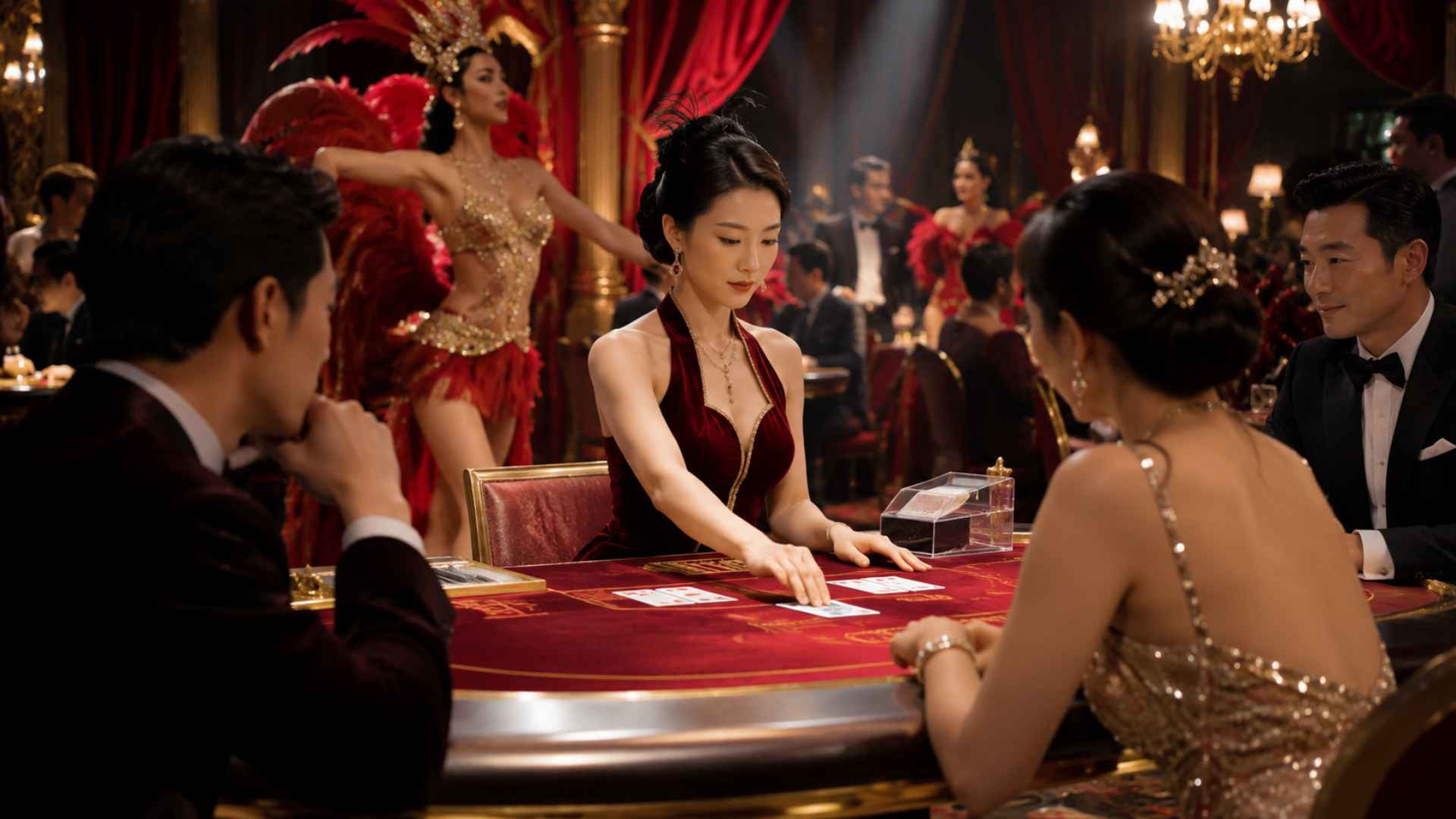
Baccarat became a useful symbol in entertainment because a card table can show social tension without elaborate explanation. A glance, a wager, or the movement of chips may communicate confidence and risk more quickly than dialogue. The scene differs sharply from a noisy slot floor: people sit close enough to study reactions, and the room can fall quiet around a single deal. Writers and filmmakers have returned to that atmosphere repeatedly, often taking liberties with the rules.
One especially durable connection is James Bond. Ian Fleming’s 1953 novel Casino Royale centers on a baccarat chemin de fer confrontation, making the card game part of the character’s early identity. The original novel’s contest offered a natural dramatic structure because a human banker mattered and the stakes were personal. Later film adaptations treated the sequence differently. The 2006 Casino Royale movie notably replaced the novel’s card contest with Texas hold’em poker.
Bond films also reinforced an international casino aesthetic, including scenes associated with Monte Carlo and high society travel. Such portrayals helped audiences recognize the visual language of elegant gaming rooms even without knowing the precise rules. Cinema rarely stops to explain third card charts, commissions, or bank rotations. It cares about facial expressions, apparent nerve, and dramatic timing, which are often only loosely connected to the probabilities behind a hand.
Fictional Card Tables and the Language of Status
In a novel, a wager can expose a character’s willingness to accept uncertainty. At a table, wealth and restraint can be shown without lengthy exposition. Fiction sometimes implies that an experienced player can read a fixed draw game and control its outcome. That is a dramatic device, not a reliable description of the modern format. In a house banked version, the dealer follows prescribed rules and a customer’s confident expression cannot influence the next cards.
Luxury advertising borrows the same vocabulary. Formal jackets, polished interiors, and large stacks of chips suggest distinction, but none of those objects defines a safer or more favorable wager. The entertainment image works because people understand risk as a story. Actual play is less tidy: results are uneven, wagers can be lost rapidly, and a striking winning scene tells us very little about what happens over many rounds.
Baccarat Beyond Film and Traditional Casino Rooms
The name baccarat now travels through media in many languages, including the Thai spelling บาคาร่า. The game appears in online video clips, tourism coverage, games journalism, and discussions of casino design. Some stories focus on cultural history, while others emphasize sensational wins. Readers benefit from keeping those purposes separate. A report about a famous scene may be accurate as film history yet offer no useful information about the mathematics of actual play.
Screen based casino services have added another kind of performance. Studio lighting and dealer presentation can resemble television production, while the game itself retains ordinary rules. The visual result may be entertaining, but customers are still dealing with monetary risk rather than a scripted contest. As public conversation shifts toward digital platforms, claims about game fairness and account safety deserve more attention than cinematic atmosphere alone.
Entertainment Value and the Reality of Chance
Entertainment has also influenced the language casinos use to attract attention. Dramatic names, luxury imagery, and promotional stories can make routine outcomes seem exceptional. Responsible presentation should distinguish the enjoyment of watching cards from claims about earning money. An appealing narrative cannot establish that a particular wager is profitable, nor can a memorable film scene predict what will happen at a real table.
The continuing presence of baccarat in popular culture reflects its unusual mixture of simplicity and ceremony. Two hands provide a result in moments, yet the setting leaves room for stories about identity, rivalry, and fortune. This makes the game easy to stage in fiction, even when the filmmaker changes its procedures. Its entertainment role is therefore partly independent of the way casinos actually operate it.
As casino media evolves, baccarat is likely to remain recognizable through the images built around it: the cards, the dealer, and the short moment before a result. Those images have value as cultural symbols, but they should not be mistaken for instructions or promises. The distinction between a dramatic scene and a real financial wager is what gives the game a more accurate place in entertainment history.